
Yeah, I got interested in the hype. I was curious about the excitement celebrated around Terrifier 2 back in 2022, but I never dove into the franchise until this October when Terrifier 3 released. A lot of reviewers and netizens I keep up with showed excitement for the film, and celebrated the series for it’s mixture of bombastic hyper-violence and surprisingly compelling character drama, and all of that got me interested in giving the series a try. As such, I dove headfirst into All Hallow’s Eve, Damien Leone’s self-organized anthology feature, followed by the first Terrifier film from 2016. And, while by this point I’ve seen both Terrifier 2 and Terrifier 3, I’ve yet to really process my thoughts (which lean positive, by the way). As such, if I have more to say on those films, I’ll be sure to blog my thoughts in the future.
All Hallow’s Eve was largely unimpressive but it’s best parts are still good. Segment one is super lofi (which is a positive, as far as I’m concerned), but has too many issues to be bearable. Segment 2 is cheesy in a way that negatively impacts the material. But, segment 3 is wicked in the worst of ways (compliment) and really asserts the vile charisma of Art the Clown. I both want to watch him be defeated while also don’t mind when he succeeds because what he’ll expose us to is so undeniably absurd in its inhumanity.
Like, I felt like it went so far past the idea of being sadistic and into downright comedy. It’s violence that’s stupid (again, compliment). It becomes slapstick. It becomes art (the medium… Not the clown lol). It’s so heinous that no one would ever really do it (yes, true crime proves me wrong. But it’s a stupendously small percentage). In that way, I couldn’t stop watching once he became more prominent.
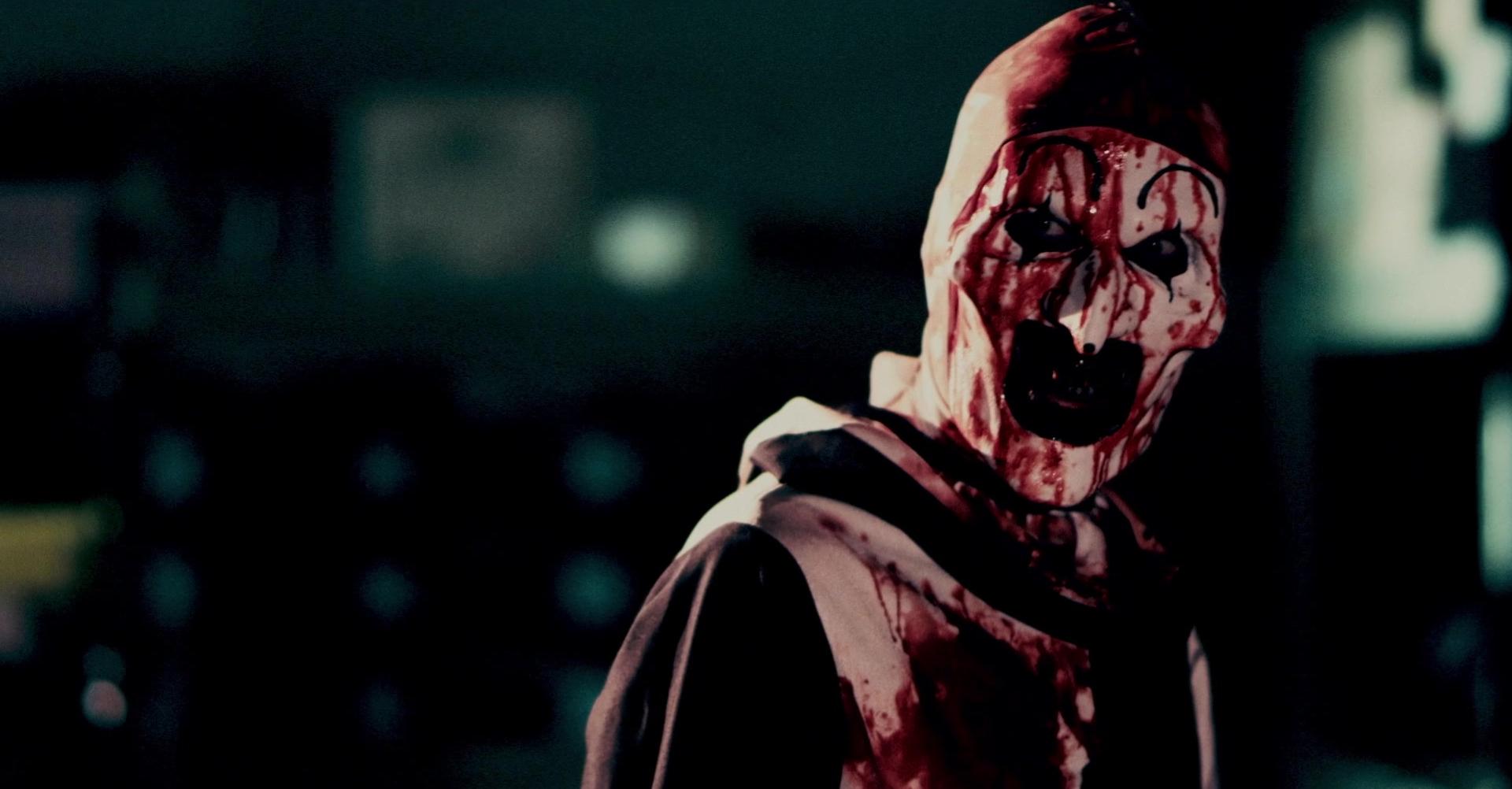
It’s definitely pursuing an edge that is extremely intense, and I can totally understand why people step away from Art in All Hallow’s Eve as having a mean-streak that evokes, like, to put it bluntly, rape-culture. To that end, there’s the voyeuristic irreverence of filmmaking that makes it palatable yet grotesque, but it also shows the ideas present in the early stages of developing this killer. Art is supposed to be stupendously extra, but it’s clear Leone would later drop his more rape-culture attitude from the equation since it’s likely a step too far into the uncomfortable or out-and-out problematic. And for good reason. Socially, murder and violence have been rejected by a majority of people. However, bad expressions of sexuality, both privately and publicly, have not been overtly rejected by society at large. As such, showcasing scenes of a largely innocent woman being maimed, branded with slurs carved by a knife, and nude on a table with full exposure isn’t exactly tasteful (to say the literal, literal least).
As always, I can appreciate a mean-streak when it’s surrounded by a knowing sensibility. I can tell what Leone is using at play right now. But it’s undeniable that Art in this iteration kills men but hates women. I look forward to when he either hates men and hates women or kills men and kills women, rather than approaching the genders like a frat-boy satisfying his vile, sensual, jorkin-it dreams.
So, with that I mind, Art at his best is thrilling to watch and a compelling villain, and that’s enhanced by some great attention to effects and visuals. In general, J look forward to diving into Terrifier. I’m excited even though I hear it splits most viewers down the middle.
Moving on to Terrifier; in all honesty, it doesn’t work all that well as an experience solely because it is trying really hard. It’s successes are in it’s slimy, realistic practical effects, but it’s failure is in it’s overly misogynistic underpinnings (or, overt…pinnings?). I don’t think it’s a movie that was made to hate women, but I do think it’s a movie that hates women. Yes, those are two different things.
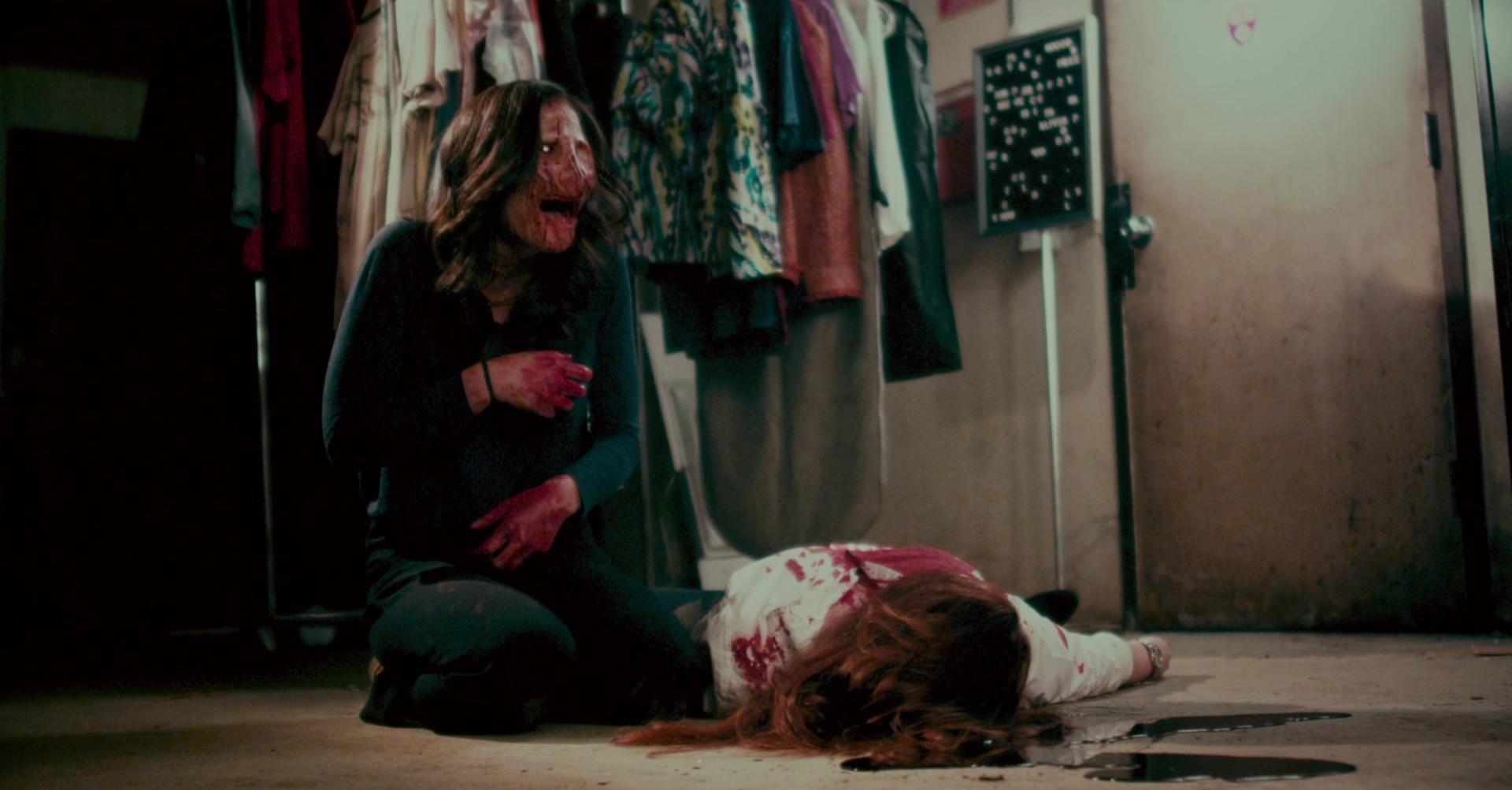
Leone made it in celebration of classic slashers, even dedicating the film to Craven, Romero, and Hooper. But, not only has the 70s & 80s horror scene cultivated a passive misogyny in displaying women in peril and various states of undress, it also birthed the seed that would develop into more and more extremities of misogyny. Passive does not remove responsibility, nor does passivity negate impact. Rather, the passive misogyny in filmmaking breeds further misogyny, just as passive racial stereotypes may do the same for racism, or Capitalism or Marxism or Western Ideology. Film hears itself and breaths itself, and soon produces and provides itself. And, like everything else, it grows. So, a lot of what is born out of the booming era of horror from the early 70s to the late 80s only naturally comes to this point: a slasher surrounded by obscenely impressive practical effects and a pointed hatred of women.
Before someone claims “Melvin you leftist shill, you liberal cuck, you beta male-” and so on and so forth, let’s recognize the very obvious, pointed imagery in the film that showcases overt misogyny that is constructed from a baseline, animalistic, sophomoric understanding of gender. To begin, I’ll explain (in as least graphic detail I can) the female kills, then compare them with the male kills.
These will include “spoilers” insofar as I am explaining ways in which people die in the film, but this isn’t really a film where-in the spoilers outright spoil the film. The text of the film isn’t in the plot, it’s the stark, graphic visuals. Therefore, as I understand it, it is literally impossible to spoil Terrifier in text form. Text would be insufficient for where Terrifier goes. So, if spoilers are something you worry about for a film that’s nearly a decade old, and also not really plot-heavy… then you may want to read something else on this blog. Here’s a link to our various editorials. Otherwise, read on!
Woman A, a reporter, is killed by Woman B, a woman whose face has been heinously disfigured after surviving an attack from Art the Clown. The context of the kill involves an interview that asserts her sadness over being so horribly maimed, even to the want of suicide. Following this scene, Woman A is on the phone behind stage and is complaining about Woman B’s looks, focusing on her grotesque presentation and also fearing her. Admittedly, this fear would pay off, as Woman B does kill Woman A, specifically by gouging her eyes. This entire series of events is predicated on looks, both it’s sadness, criticism, and then kill. Woman do be like that, amirite fellas? (/sarcasm)
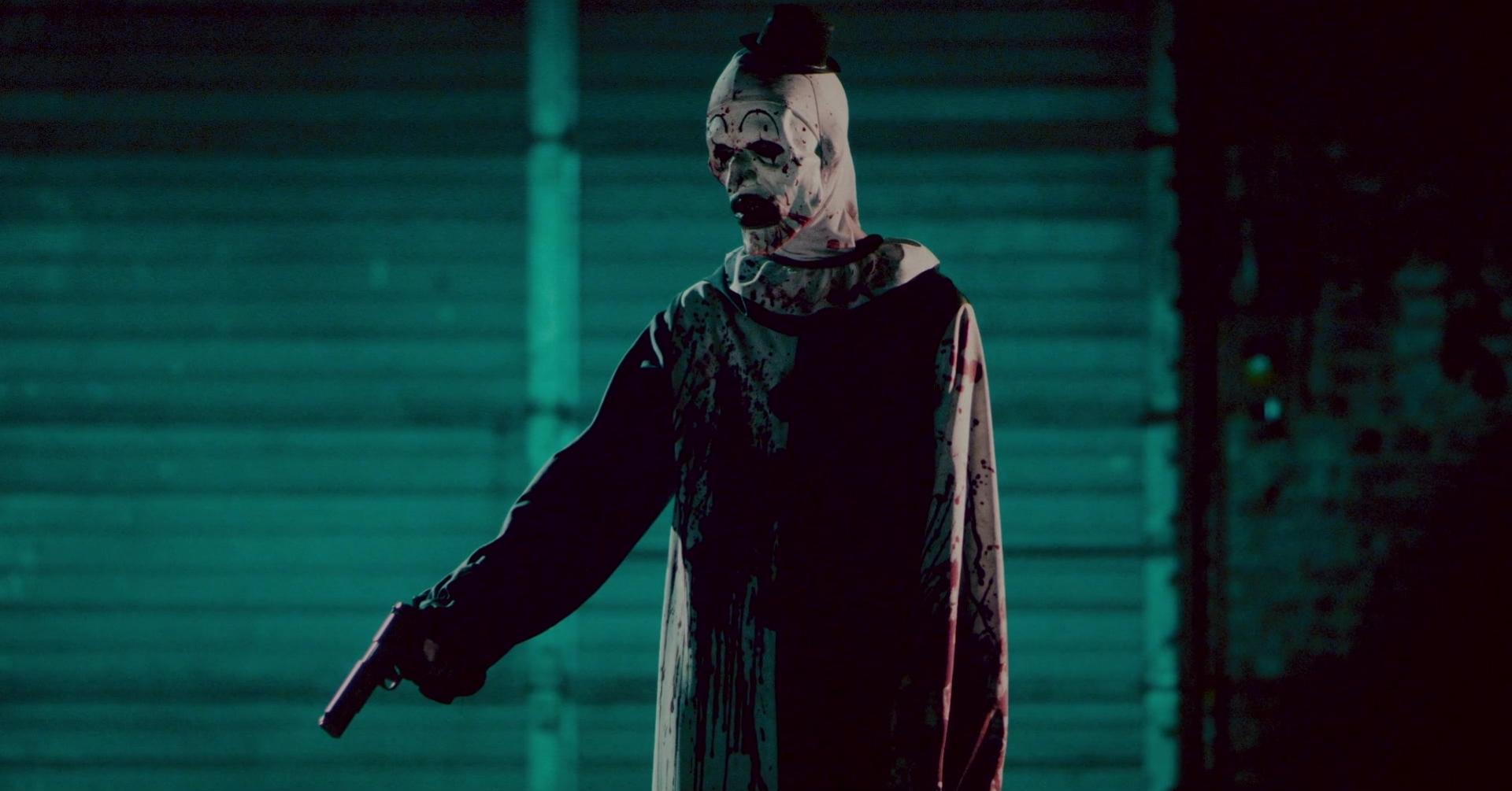
The next female kill is the notorious saw kill that people mention when bringing up this film. A woman is barechested, wearing underwear, and strapped upside down. This visual evokes BDSM, an inherently power-based sexual act that is often explored primarily through misogyny, and also has a very “meat”-like nature to it. Art will then strip her last remaining pair of clothing, place a rusty saw between her spread legs, and cut her in half. Our first female kill is about looks between women. Our second female kill is blatantly vaginal, undoubtedly producing several metaphors of sexual violence… by outright including sexual violence. The extremity of the violence is compelling insofar as it is film doing what it does: showing us that which does not exist in our mundane lives. Even so, context is key, and there is very little context for such a kill to be within the film. There’s no setup, no punchline, no constructed implication as to why such a kill happens other than shock value. Which, has its purpose, surely, as a good wince and toe-curl is one key aspect of horror films. Even so, this is the second female kills that evokes a sophomoric understanding of femininity: first looks, now vagina.
Our third female kill involves what is undoubtedly the most mundane death in the film, but ultimately ends with a combination of two things that subtly showcase a sophomoric, misogynistic depiction of femininity. First, she is killed with several gunshot wounds to the head, which could be included in the first observation as a deconstruction of female looks, but for me evokes imagery of domestic violence. There’s an impotence to the scene, specifically in that this character witnesses the previous death, then chooses to fight Art before being bested by a weapon of unequal power.
Men often are at a biological advantage to women in terms of physical strength, and thus use their biology to their advantage. Such means can include evil violence against woman, which on an emotional and spiritual scale kills the woman. Here, it’s hyperbole is in weapon choice (which, admittedly, is a surprise to see! Although that surprise came in All Hallow’s Eve, so I wasn’t totally caught off guard when Art used a gun). But, her depiction of misogyny is in her corpse, as she is later seen surrounded by Christmas lights with a crude sign reading: CIRCUS.
Dead women have become synonymous with filmmaking, let alone storytelling. Women are often used as the catalyst for male revenge, or revenge in general. Women may be utilized as a plot point for a character to change, whether positively or negatively, as a character capitulates to their sinful desires or suffers loss. But, in horror, women largely represent vulnerability, and female fear incurs more sympathy than male fear. Nightmare on Elm Street 2: Freddy’s Revenge is a great example of how male fear is largely mocked, as a man who is afraid is a coward, and is thus a bastardization of depicting manhood, but a woman who is afraid isn’t a coward, just merely afraid; afraid of losing their beauty, their purity, or whatever other sophomoric, misogynistic description of women may entail. The point, here, however, is that she is displayed as a prop. Because of course she is. She’s a woman. She has no other purpose here than to be ogled (/sarcasm, again. Just want to make that clear. I’m making a blunt point).

Our last female kill involves a homeless woman who believes a doll is her living child. She comes across Art who is swaddling the doll, and the woman makes attempts to draw upon Art’s “kindness”, under the assumption he may have some, as well as seeking to impart a “mother’s touch” to him in the hopes he may rescind. Apart from this scene including a fare amount of fun horror silliness, it’s result, again, cannot resist the urge to embrace misogyny. It may lead to a petrifying visual, but that isn’t due to the visuals insofar as it is due to David Howard Thornton’s performance. Because, rather than kill this woman outright (although he likely does off screen), Art scalps the woman and skins her breasts off her body. Art then disrobes, puts on the woman’s scalp, and lays the woman’s severed breasts upon his chest. He then chases after his next victim, silently cooing and floating around as though he has become a dainty, pristine, serviceable woman.
Not only has hair been a symbol of womanhood since time immemorial, breasts, too, are a very overt attribute of womanhood. For Art to don these aspects of this woman who sought to show kindness may at least permit itself to be a setup-punchline style of kill, but it comes after a series of mindless, vapid murders that do not permit themselves the same luxury. As such, anything thought to be purposeful is presupposed at best, and completely devoid of purpose at worst.
All three of this kills come in response to Leon’s previous work, All Hallow’s Eve, which includes one short film where-in a woman’s baby is involuntarily C-Sectioned for a sacrifice (and another implies to be raped by a demon after the fact), another woman in a short is cut down to her torso, has her breasts removed, and is covered in knife-cuts that spell misogynistic slurs (while naked), and whose wraparound ends with a babysitter (largely a female job) failing to protect two children from Art the Clown (a mother’s nightmare!). As such, one could make a case that Leone was a misogynist in his previous life (keyword “was” because both of those works are from 2016 prior), but it is undeniable that these two works are blatantly misogynistic in their own.
Cross-reference this with the male kills which largely includes various forms of head trauma. Head trauma of different kinds is always a good wince-inducer for audiences as the face and head are so sensitive. We feel it all, so go for it when making a film. But, none of this compares to the rigid, rusty steel of a pointed saw’s blade resting between one’s legs, nor to the humiliation of someone tearing apart one’s two primal icons of gender: hair and breasts. And, I understand these are old-school ways of discussing gender, but slasher films are often predicated on old-school fears: “Oh my gosh, someone is trying to kill me.”. It doesn’t get simpler than that.

And one may consider these male head-trauma kills an intentional decision against the “headship” of malehood, which would be an overt criticism of Cultural Christian ideas born out of the Dobson era (and not based on biblical truths) of gender comprehension. So, to have each man have their head destroyed is like having their penis destroyed, except more overtly directed toward their soon-to-be lack of authority (you know, cause they’re dead) as opposed to their self-idealized, pride filled self. This is ultimately what I may (jokingly) consider a “charitable read” at best, and even then I’m not giving the film much credit. Art presents himself as male, so for him to “deconstruct” malehood by killing other men this way ultimately puts him at the top of the pedestal, and thus returns to an ideology of misogyny. Male, female; it doesn’t matter the difference, because one man seems to rule them both, either through violence or sex, and some by both.
Now, as stated before, I have seen both Terrifier 2 and Terrifier 3, and both films involve male-genital violence (graphic! Visual! And clearly fake!). One kill is more of a pun played upon a setup (with a hilarious payoff), and the other is a blatant response to the criticisms of Terrifier’s notorious girl-cut-in-half kill. And my response to both kills were in total and complete contrast to how felt watching a woman be sawed in half through clever editing cuts and a lot of fake-blood! With that in mind, I do think it will make for an interesting write-up to explore why this may be, and so, as stated before, keep those eyes peeled for a future Terrifier 2 & 3 write-up. But, in brief, it really comes down to interpreting violence within the confines of classism. Men are near-entirely in positions of power and authority, and weekly – if not daily – there are reports of very powerful men utilizing their position to commit heinous acts of abuse and sexual violence upon their subjects, whether they be male or female. As such, the inherent, unique hyperbole of fiction permits catharsis in expressing a classist attack against such evils.
A man’s genitals are wholly divorced from the abuse taking place on screen for two reasons: the penis has been used for violence, and the penis has been a symbol of self-idolizing and aggrandizing, and thus the “tearing down” of the penis is an act of classist victory. Contrast this against how the vagina is often the target of those with a penis, to the point that several men won’t even care if the vagina is a part of a woman whose willing, alert, or even living. As such, the social context of sexual violence against women is inherently inextricable from its real-world context.
While such a scene as the woman being sawn in half, or even the several other kills, can be celebrated for their grotesque investment in the macabre (and I’m not so prudish as to wholly and completely say the film isn’t “worthwhile”… with major caveats of course), they will eternally be within the context of a world that has seldom respected women. As such, the act of penile destruction operates in a wholly different field. Plus, in this franchise, its colored by the context of All Hallow’s Eve and Terrifier, and thus will likely always get a laugh from the audience as they go, “Oh, we know exactly why he’s doing this!”.
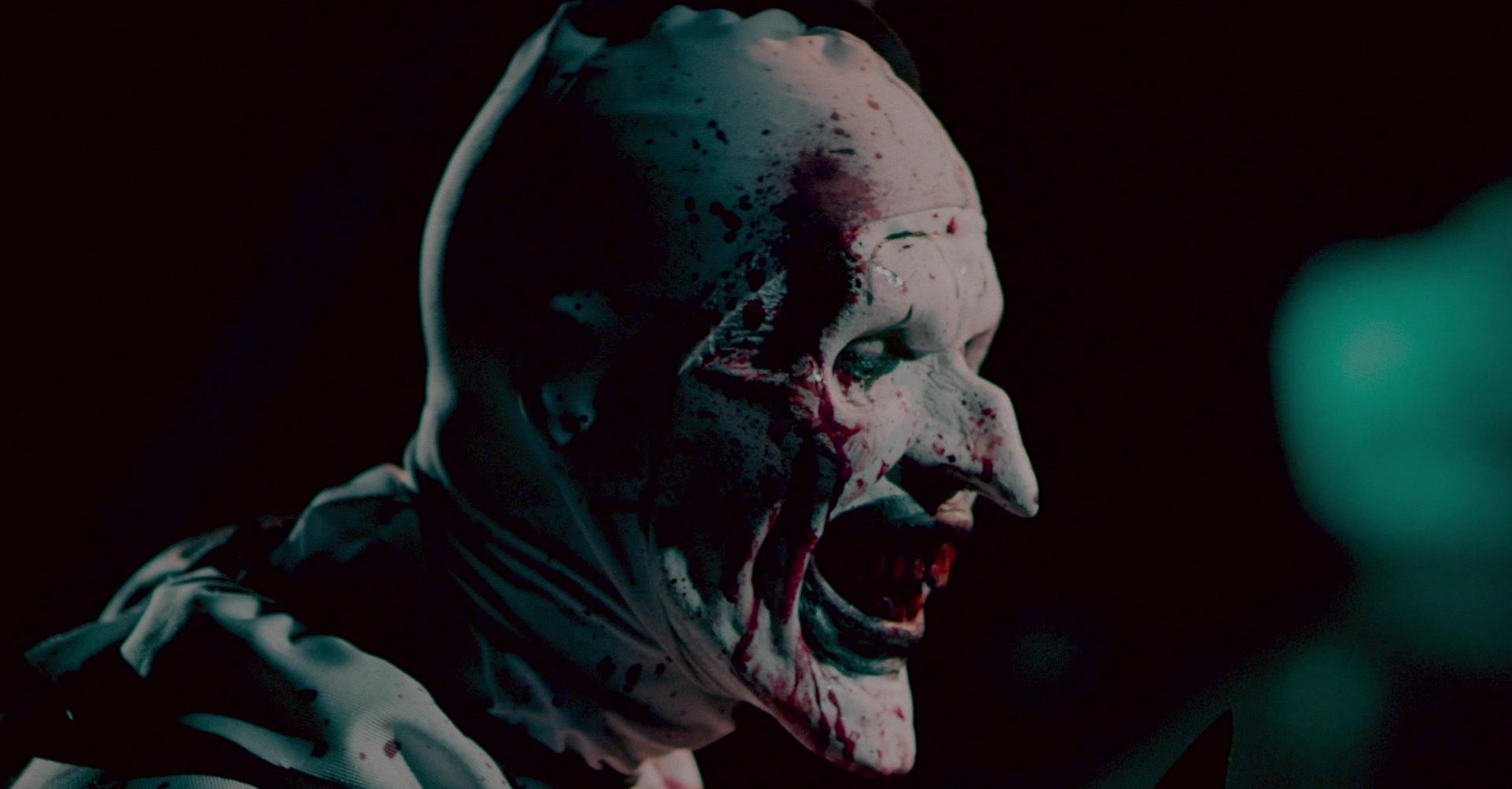
Now, returning to Terrifier, despite where its sequels will go and what they’ll do to their victims, the film is still inherently misogynistic. The film Terrifier hates woman overtly, while it kills men implicitly. It has no beef with men, but it despises woman in every respect. There is not one inch of a woman it cares to preserve, and even the woman sawed in half later looks like nothing but hanging meat, all thanks to her blood crusting over her body. It wholly and completely rejects the inherent value of woman apart from their bodies. It isn’t asking for consent; it demands a woman open her legs by forcing them into a hanging position.
Now… the real kicker is this: I’ve known about this film for years before it’s sequel exploded on the scene, and the design of Art the Clown has always caught my attention. As such, I knew I was going to at least marginally enjoy the material, and also avoided it because I more-or-less knew about its material. And, in terms of excess, I did. I like a slasher, and I like some grotesque grime. I also enjoy a mean-streak, but the film failed in having an understanding of balance. The reality is simple: murder and violence has largely been rejected by our modern, Western society. It is bad sex and bad sexuality, specifically against women, that has not been overtly rejected, as people publicly and privately embrace bad sexuality. So, a film like this, for myself, crosses a line when it seems to embrace bad sexuality as a means of entertainment.
And, with all things considered, bad sex, especially in film, leads me to worry what gooner forum has a scene or two from Terrifier in its thread. I begin to think about film in a way of inextricable morality: “Is the world better because this is here?”. I can confidently say the world is better because Dead Alive is here, and that films violence is stupendously over the top. Terrifier, however, I cannot say the same in many respects. I enjoyed the effects, and in some ways I enjoyed its twisted, vile, hopeless horror. But, I didn’t enjoy much else. Those sequels though… now that’s a different story!
Want more Christian-influenced media coverage? Subscribe to the Cinematic Doctrine podcast on iTunes, Spotify, YouTube, or your favorite podcast app!

Consider supporting Cinematic Doctrine on Patreon! As a bonus, you can gain access to a once-a-month movie poll where you decide a movie we discuss on the podcast, early unedited episodes of the podcast, and merch!!
Melvin Benson is the Founder, Editor-In-Chief, and Lead Host of Cinematic Doctrine. Whether it’s a movie, show, game, comic, or novel, it doesn’t matter. As long as it’s rich, he’s ready and willing to give it a try! His hope is to see King Jesus glorified as far as the east is from the west!

Cinematic Doctrine is available on iTunes, Spotify, YouTube, and other major podcast apps.





 Cinematic Doctrine
Leave a comment