
It’d been months before I logged Joker: Folie à Deux on Letterboxd. I saw this film opening weekend, on my birthday, and remember walking out of the theater going, “Apart from the literal last moment of the film, I don’t see it. I don’t see what turned that many people off to this movie.”. It was, at the very least, a sleek, well made, visually pleasing, well performed, and consistently thought-provoking movie, even if it was in service of all kinds of miserable, horrible, truly upsetting things. The whole of its material, including Joker, oriented toward upsetting material. And while I understood the criticism’s levied at Joker, albeit focused more on the response to the film rather than the film itself, I stepped out of Joker: Folie à Deux thinking quite confidently, “That was leagues better than Joker.”.
A lot of what’s explored in Joker: Folie à Deux has undeniably continued themes from its predecessor, but it dives so much further into them than Joker neither dared nor had time to explore. First and foremost, Joker: Folie à Deux is a cult movie, but it’s also reaching into the idolization of social celebrities, cults of personality and ideology, how a systematic failure is indicative of systematic malpractice and malintent, how media based on real life turns people into products for mere consumption, the way classism from both directions conflicts with the inherent value of human life, the unique hardship of guilt and shame, and the seemingly impossible task of becoming a better person in a world that grows worse and worse each day. Atop all of this, Joker: Folie à Deux overtly converses with Joker, exploring the infantilizing idolization of fiction, and the intrinsic danger of living for a fantasy.
Obviously that latter point is perhaps the most obvious takeaway, as the trending discussion online at the time of release was how the film critically responded to it’s predecessor’s impact. I think people forget what 2019 was like because 2020 was the longest year on record, but the big fear and frenzy over Joker was how it may enable or empower incel culture, or how it had empowered them in terms of some kind of sick validation of their misery. And while I considered myself one who at least connected with Joker, it wasn’t for any of those reasons, even if I was aware of both those fears and also aware of the people and communities it would inspire. But, for Joker: Folie à Deux to so acutely deconstruct this ideology of seeking validation in fiction, I think it’s important to note that the people feared in 2019 were largely the same people who “memed” President Trump into office the first time (off the guise of him making “anime real”, ruling as a “God Emperor”, showing solidarity to “KEKistan”, and insert any other 2015-2019 4Chan sourced meme) or collected countless anime figures of their various waifus (both brand and off-brand; because, you know, the off-brand one’s you can take their clothes off) or largely spent their waking moments “socializing” online, seldom spending time with others or letting others into their lives. Joker: Folie à Deux is taking to task the dangerous nature of devoting one’s self to a fantasy. And while the fear was largely toward those considered blisteringly white, right-wing, incel gooners who spend their days endlessly refreshing the front page of /b/, the same could be said for any horoscope loving, Drew watching, tabloid collecting wino aunt who endlessly browses NextDoor for the latest local goss. It’s all fantasy. It’s not real.

And we can all understand why fantasy is so intoxicating. It’s romantic, beautifully cultivated within our image. It never changes, stable in it’s presentation and wholly crafted by our hands. It can transport us to anywhere we want, even going so far as to make us feel completely different than we may have before. And what’s more transportive than music? Many have criticized musicals for having songs that go nowhere, seldom integrated with their material or narrative just as I had for the film Journey to Bethlehem, but not all musicals are created equal. Even if it’s by accident, the fact that most, if not all, the songs in Joker: Folie à Deux are stable fantasy sequences that don’t share anything new… wouldn’t that only make sense for a fantasy? And as the film evokes the dangers of visual media, a film evoking old Hollywood’s fascination with musicals only made sense to me. Additionally, as a fantasy is entirely about reworking the real world into a more pleasing image, Joker: Folie à Deux’s choice to cover oldies only felt in line with everything else the film showcased: We are all taking something and amending it to our whims and desires. Some of my favorite songs are my favorite songs because of what they mean to me, or how they spoke to me at a certain time in my life. That experience is largely disconnected from the musician, and while I can appreciate or even educate myself upon the original intent, a large part of art is the way it changes in the eyes of its beholder. And as Todd Phillips had described Arthur Fleck as a man with “music in his soul” during the release of Joker, it only seemed sensible that the brief moments of joy and excitement within the film would be sidelined to fantastical, wholly “irrelevant” musical numbers. Because if this music could be seen by someone else… what would that mean? And how easy would it be to thrive within one’s own delusion if they found someone who enabled it?
Which, frankly, is an additional fascination I have with Joker: Folie à Deux. To develop (Har)Lee into this character that enables Arthur not only brings a new take on the character, it further explores the idolization of others. We’re seeing something similar now where-in Luigi Mangione, a man who allegedly murdered another, is heralded for his violence. As someone who has much enjoyed the dark, edgy humor of it all, and even understands the deep classist desire to despise CEOs, there’s still something sickening about the dynamics of a single man overstepping institutional justice to enact their own. Are we right to enable evil? What if evil overtakes other evils? Surely CEO’s of the modern era, just like era’s passed, are monstrously exploitative. I have no doubt in my mind such men are violent, evil men who have largely committed more harm than good. And no doubt the blood on a CEO’s hand will forever outmatch the alleged bloody hands of Luigi Mangione. Even so, each person lives with a higher calling toward righteousness, and if Joker is the descent into denial, Joker: Folie à Deux is the excruciatingly difficult ascent in an ever-falling, broken world.
It’s been 15 years of this particular era of comic book films, and while the film obviously takes to task a certain type of viewership, maybe it’s most sensible to say that this film criticizes Hollywood’s view of the comic book movie cash-cow rather than an audiences idolization of franchise. I’m lead to believe this due-in-part by the film’s opening animated intro. Again, this may not be intentional, but all I could think of was Gremlins 2: The New Batch and how Joe Dante’s devil-may-care attitude was constantly on display throughout that film, starting with an animated Looney Tunes intro that makes you wonder if you’re watching the wrong film. Similarly, when Warner Bros. can’t make a consistently successful DC universe film, and then they see this weirdo depressing “indie-style” drama make a $1billion, it makes sense for them to run back to Todd Phillips like they had Dante when the Critters franchise was losing steam. “The pictures great, Todd! Give us a sequel. Anything! We love ya!” (actually just loves money).
With that in mind, it must be mentioned: $200million is absurdly irresponsible for a budget. I understand that Todd Phillips, Lady Gaga, and Joaquin Phoenix asked to be paid for roughly the entirety of the first film’s budget, which means the film would have to at least surpass $100million in cost, but a $200million total budget is absolutely ridiculous. The movie looks great, busy, and brings back two things I miss from modern big-budget films – real sets and a plethora of background extras – but spending this much on a film crosses such an extreme level of risk, especially for something R-rated with this level of content. The budget for this film should have been $160million, $180million at most.
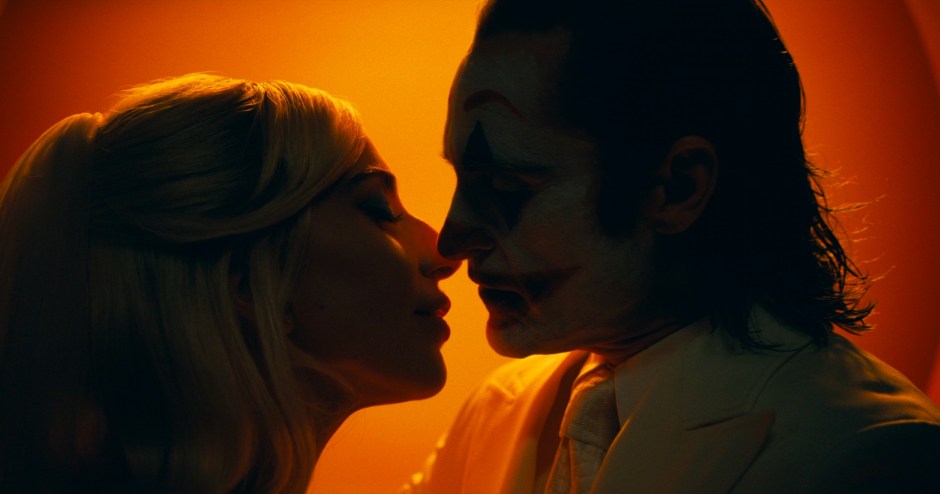
Regardless, a few days after seeing the film I had come to realize I was on board with it. I understood why people had rejected the film, and I understood the desire to dunk on not only a massive Warner Bros. blunder (because, you know, Zaslav is insane) but also a Joker sequel failing, but I don’t think this film is nearly as misguided, boring, or horrendous as it’s been written off to be. Rather, I think it has a lot to ponder and appreciate. Arthur Fleck became an unwitting cult leader, taken advantage by a people who wanted to utilize his iconic image to spark a classist revolution and a well-off woman in prosperity to get revenge on a world she despised (despite living in undeniable privilege). It’s a film that criticizes cult members for upholding the icon of their desire and worship, understanding that not all ideology is dependent on charismatic leaders. In the case of Arthur Fleck, he’s a man who eventually wants to be who he alone can be, but a cult despises a turncoat and cannot let that slide. Where the truth goes, lies cannot preside, and I think that’s what makes the film so powerful to me. Arthur is an unwitting cult leader, yes, but an independent man nonetheless, and an independent man is an oxymoron among a cult. Arthur could continue to live in his fantasy, even fantasizing with the world about what it would be like to see change through riotous means, but the truth is no one can make authentic, right, good, real change through fantasy; only through reality. And when he wakes up, will anyone want him for who he is, who he wants to be, who he can be, or will he be forced to conform to the fantasy again?
The rejection of Joker: Folie à Deux seems only fitting. It wasn’t what people wanted. General audiences didn’t want a musical where their T-Shirt icon endures horrible event after horrible event. Everyone else seemed to reject it’s hum-drum, day-in-the-life pacing as a men-talking-in-rooms movie. And yet, unlike its predecessor, Joker: Folie à Deux doesn’t feel like it’s leaning so heavily on past “quiet, angry men” movies. As Mark Kermode described in his positive review, it’s a film with “conviction“. It doesn’t feel like it’s figuring out how to say what it wants to say through the words of another; it’s figuring out what to say through itself. It’s, perhaps, the most expensive self-expressive arthouse movie I’ve ever seen, completely rejecting normalcy in both the comic book movie scene and the current wave of arty, provocative films. It’s logic is its own, it’s characters are borderline unrecognizable from their comic book counterparts, it’s tone is dour beyond compare, it’s premise is bleak and offensive, and it’s hope is in the mere existence of compassion itself. It gives the audience what it wants – an end to Todd Phillips Joker duology – while showing them how unsatisfying it can be to watch something end at all. Like Arthur, it’s choosing to speak for itself, ignoring the fiction so many would prefer. And, more importantly, it’s a movie so unabashedly itself that it stands distinct from so many other films I’ve seen in the last several years. It’s rejection is fitting, ironic, and sensible, as this film wasn’t what people wanted it to be, whatever that may be.
Joker: Folie à Deux is a movie I cannot stop thinking about. I don’t think I ever will. It’s independence is to be celebrated, and it’s a fitting end to an era of near-constant comic book movie’s from Hollywood. I don’t think we’ll ever see anything like it again, and that’s likely what Hollywood and audiences want.
Want more Christian-influenced media coverage? Subscribe to the Cinematic Doctrine podcast on iTunes, Spotify, YouTube, or your favorite podcast app!

Consider supporting Cinematic Doctrine on Patreon! As a bonus, you can gain access to a once-a-month movie poll where you decide a movie we discuss on the podcast, early unedited episodes of the podcast, and merch!!
Melvin Benson is the Founder, Editor-In-Chief, and Lead Host of Cinematic Doctrine. Whether it’s a movie, show, game, comic, or novel, it doesn’t matter. As long as it’s rich, he’s ready and willing to give it a try! His hope is to see King Jesus glorified as far as the east is from the west!

Cinematic Doctrine is available on iTunes, Spotify, YouTube, and other major podcast apps.




 Cinematic Doctrine
Leave a comment